
The MTA Growth Journey
Belong. Build. Lead. Serve. Leave a Legacy

Every young person begins by belonging and grows toward leadership, service, and lasting impact.
At Moore Than Athletics, youth do more than attend programs.
They enter a connected journey designed to grow with them over time. Through age-appropriate experiences, caring relationships, family engagement, reflection, and increasing responsibility, youth move through five stages:
Belong → Build → Lead → Serve → Legacy
Each stage meets young people where they are while preparing them for what comes next.
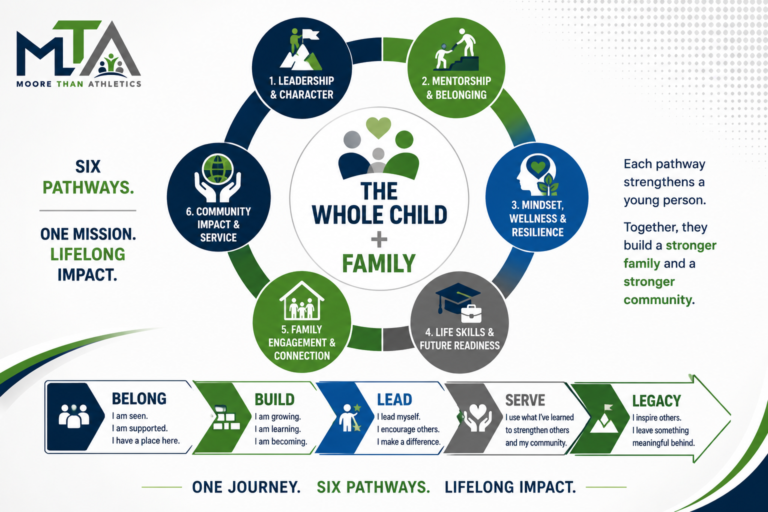
One Journey. Six Pathways. Whole-Child Growth.
The MTA Growth Journey and our six Development Pathways work together, but they serve different purposes.
The Growth Journey shows how a young person progresses from belonging to leadership, service, and legacy.
Youth do not complete one pathway and leave it behind. Each pathway remains part of their development as expectations, opportunities, and responsibilities deepen with age and readiness.
The Development Pathways shape what they learn and practice throughout that journey:
- Leadership & Character
- Mentorship & Belonging
- Mindset, Wellness & Resilience
- Life Skills & Future Readiness
- Family Engagement & Connection
- Community Impact & Service
The pathways develop the whole young person. The journey helps each young person grow forward.
The Five Stages
Stage 1: BELONG – Connection Before Correction
Belonging gives young people the confidence to begin.
I am seen. I am supported. I have a place here.
Every young person begins with belonging.
Before youth can confidently lead, take healthy risks, or develop new skills, they need to feel safe, valued, welcomed, and connected. During this stage, MTA helps youth understand the culture, build trusted relationships, identify their strengths, and recognize that their voice matters.
Family connection
Families are welcomed as active partners from the beginning. Parents and caregivers help MTA understand the young person’s strengths, interests, needs, goals, and lived experiences.
Youth begin to:
- Build trust with peers, facilitators, and mentors
- Develop confidence and positive self-awareness
- Practice respect, responsibility, and encouragement
- Learn how to participate in a supportive community
- Identify personal interests, strengths, and goals
- Understand the MTA standards and shared expectations
Evidence of growth
- Participation and engagement
- Relationship-building
- Personal reflection
- Initial goals
- Demonstration of MTA standards
- Family input and facilitator observations
Stage 2: BUILD – Skills Become Habits
Youth build confidence by practicing skills—not by being expected to already have them.
I am discovering my strengths and building the tools to grow.
In the Build stage, youth begin turning potential into practical skills and healthy habits.
They participate in age-appropriate experiences that strengthen communication, emotional awareness, decision-making, teamwork, discipline, goal-setting, and everyday life readiness. Youth are encouraged to try, reflect, make adjustments, and keep growing.
Family connection
Families receive opportunities to reinforce healthy routines, communication, responsibility, and goal-setting at home. Family experiences help connect what youth practice at MTA with everyday family life.
Youth develop:
- Communication and teamwork skills
- Self-management and healthy routines
- Confidence in making decisions
- Goal-setting and follow-through
- Problem-solving and conflict-resolution skills
- Resilience when facing challenges
- Age-appropriate life and future-readiness skills
Evidence of growth
- Completed goals and action steps
- Growth Journal reflections
- Skill demonstrations and projects
- Improved consistency and responsibility
- Facilitator and family feedback
- Recognition for effort, character, and progress
Stage 3: LEAD – From Participation to Positive Influence
Leadership is not simply being in front. It is using your influence to help others move forward.
I can lead myself, encourage others, and use my voice with purpose.
Leadership at MTA is not based on popularity, athletic ability, or having a title.
It begins with self-leadership: making responsible choices, communicating respectfully, following through, and setting a positive example. As youth demonstrate readiness, they receive opportunities to lead activities, support peers, contribute ideas, and help shape the MTA experience.
Family connection
Families are invited to recognize and encourage leadership beyond MTA—at home, in school, in sports, in faith communities, and throughout everyday life.
Youth learn to:
- Lead through character and consistency
- Communicate ideas with confidence
- Make responsible decisions
- Encourage and support peers
- Help resolve problems constructively
- Accept feedback and remain coachable
- Take ownership of tasks and group responsibilities
- Use their strengths to contribute positively
Evidence of growth
- Youth-led activities or discussions
- Group responsibilities
- Peer support and positive influence
- Leadership projects
- Portfolio milestones
- Facilitator recommendations
- Demonstrated accountability and initiative
Stage 4: SERVE – Leadership in Action
Service helps youth understand that their gifts can strengthen someone else’s life.
I use what I have learned to make a difference.
The Serve stage helps youth understand that leadership carries responsibility.
Young people apply their skills through service projects, community experiences, peer support, family initiatives, and opportunities to address real needs. They learn that service is not just an event—it is a mindset rooted in empathy, contribution, and shared responsibility.
Family connection
Families may serve together, help identify community needs, contribute ideas, and participate in projects that strengthen their neighborhoods and relationships.
Youth participate in:
- Community-service projects
- Family-centered service experiences
- Youth-led outreach
- Peer support and mentoring
- Community problem-solving
- Volunteer and civic-engagement opportunities
- Collaborative projects with schools and partner organizations
Evidence of growth
- Service hours
- Project planning and completion
- Team contributions
- Community feedback
- Youth reflections on impact
- Increased responsibility
- Peer or younger-youth support
Stage 5: LEGACY – Growth That Continues Through Others
Legacy is what happens when one young person’s growth creates a pathway for someone else.
I am prepared to create opportunities, guide others, and leave something meaningful behind.
Legacy is not the end of the MTA journey. It is the point where growth becomes multiplied.
Older and more experienced youth use their knowledge, character, and leadership to guide younger participants, contribute to organizational decisions, facilitate experiences, support community initiatives, and prepare for life beyond high school.
Family connection
Families celebrate progress, support future planning, and remain part of the MTA community as youth transition into advanced leadership, alumni, mentorship, and service opportunities.
Youth may advance into roles such as:
- Peer Leader
- Junior Mentor
- Mentor-in-Training
- Youth Facilitator
- Youth Leadership Council member
- Community Project Leader
- MTA alumni or ambassador
Youth continue developing:
- Mentoring and facilitation skills
- College, career, and workforce readiness
- Public speaking and advocacy
- Project and event leadership
- Community responsibility
- Personal purpose and long-term goals
- A documented record of leadership and service
Evidence of growth
- Leadership Portfolio completion
- Mentorship or facilitation experience
- Advanced service responsibilities
- Youth-led projects
- College, career, or transition planning
- Community recommendations
- Contributions that strengthen future participants
Youth Progress by Readiness, Not Just Age
We meet youth where they are, recognize how they grow, and help them take their next meaningful step.
Every Youth Starts With Belonging.
Every Journey Is Individual.
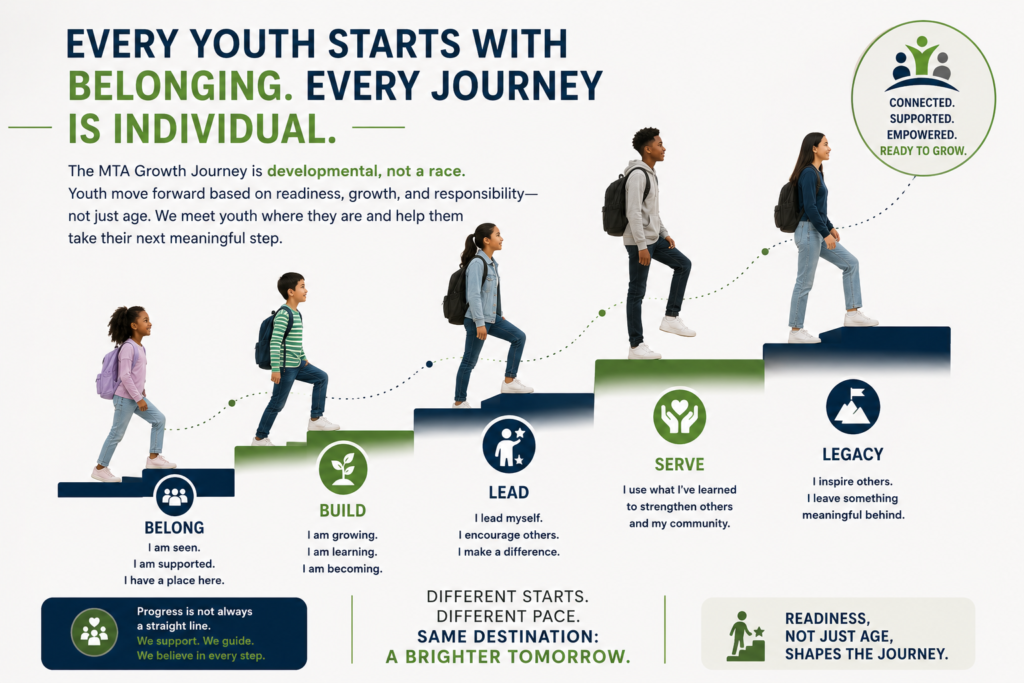
The MTA Growth Journey is developmental, not a race.
Every new participant begins with Belong, regardless of age, because connection, trust, and understanding come first. From there, youth move forward based on demonstrated readiness, consistency, growth, and responsibility—not simply because a certain amount of time has passed.
Older youth may move more quickly into Build or Lead opportunities after completing their belonging and orientation experience.
Younger youth may demonstrate leadership in age-appropriate ways while continuing to strengthen foundational skills.
Youth can also revisit an earlier stage when they need additional support. Progress is not always a straight line, and receiving support is never treated as failure.
How the Journey Works Across Age Groups
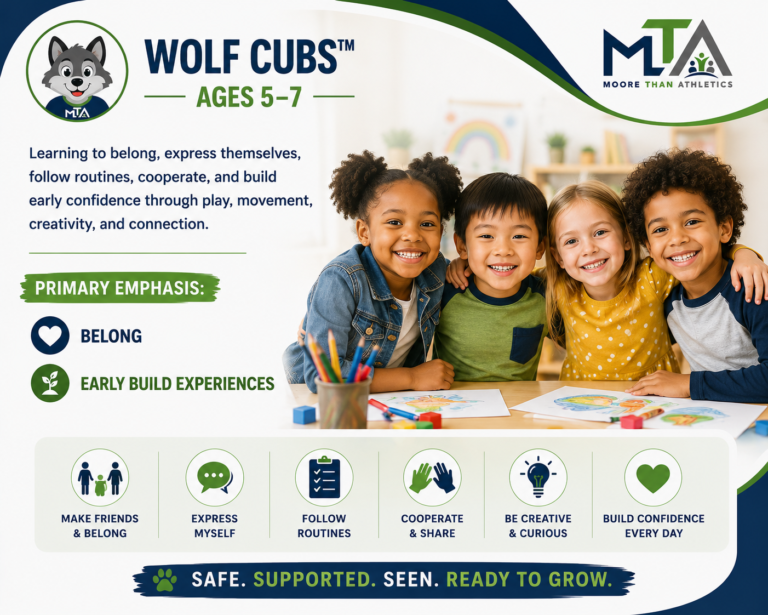
Wolf Cubs™ | Ages 5–7
Learning to belong, express themselves, follow routines, cooperate, and build early confidence through play, movement, creativity, and connection.
Primary emphasis:
- Belong
- Early Build experiences
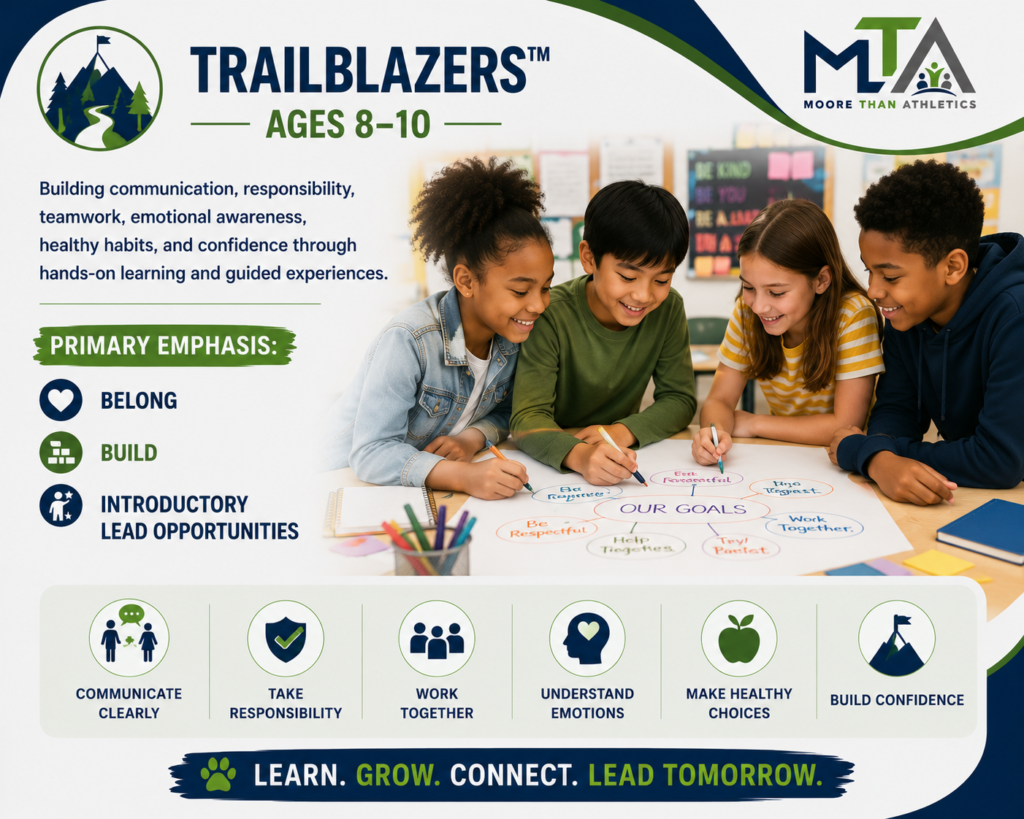
Trailblazers™ | Ages 8–10
Building communication, responsibility, teamwork, emotional awareness, healthy habits, and confidence through hands-on learning and guided experiences.
Primary emphasis:
- Belong
- Build
- Introductory Lead opportunities
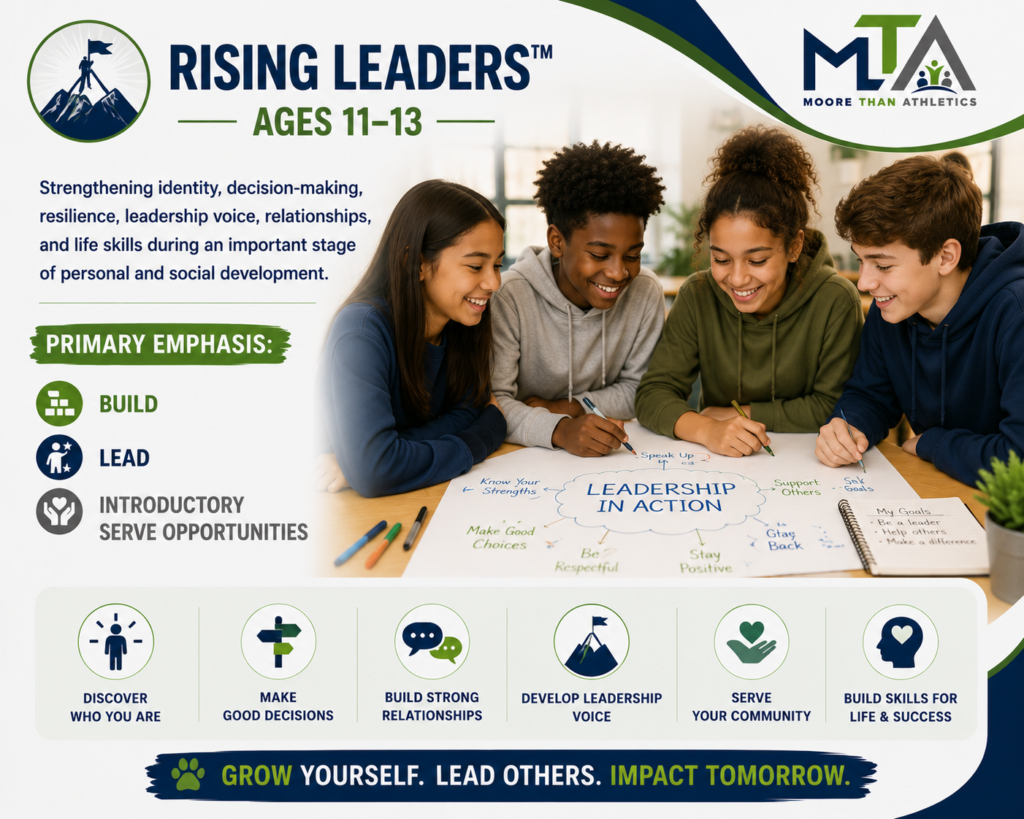
Rising Leaders™ | Ages 11–13
Strengthening identity, decision-making, resilience, leadership voice, relationships, and life skills during an important stage of personal and social development.
Primary emphasis:
- Build
- Lead
- Introductory Serve opportunities
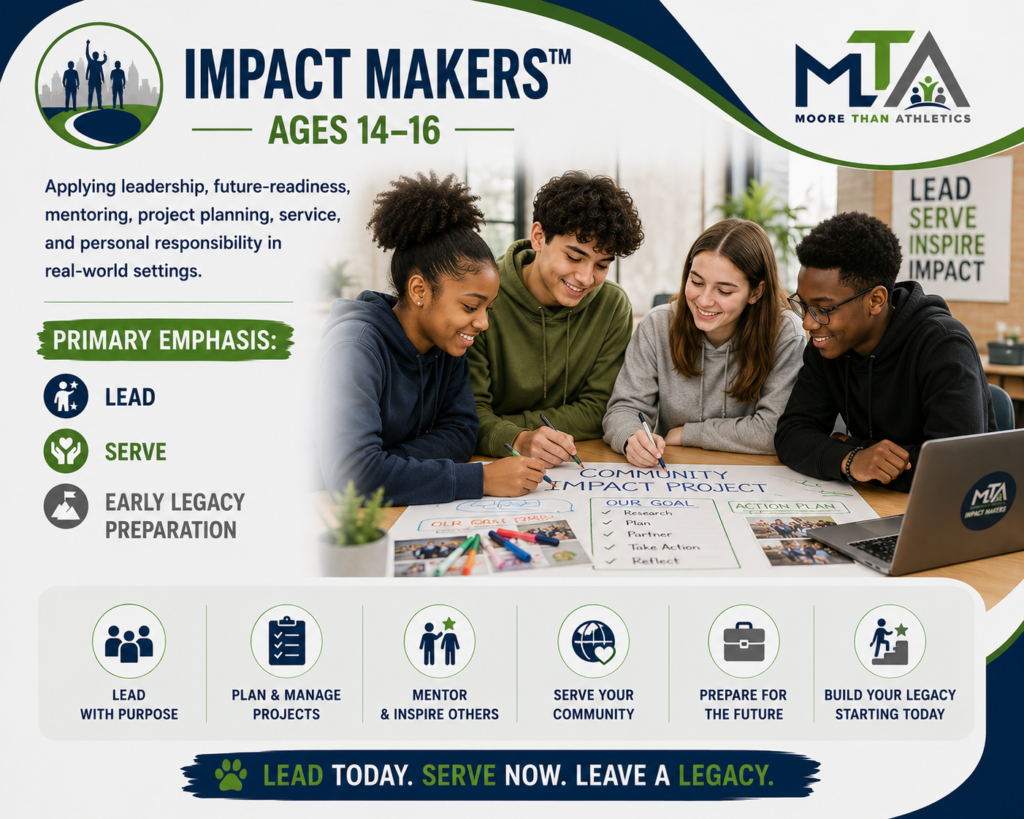
Impact Makers™ | Ages 14–16
Applying leadership, future-readiness, mentoring, project planning, service, and personal responsibility in real-world settings.
Primary emphasis:
- Lead
- Serve
- Early Legacy preparation
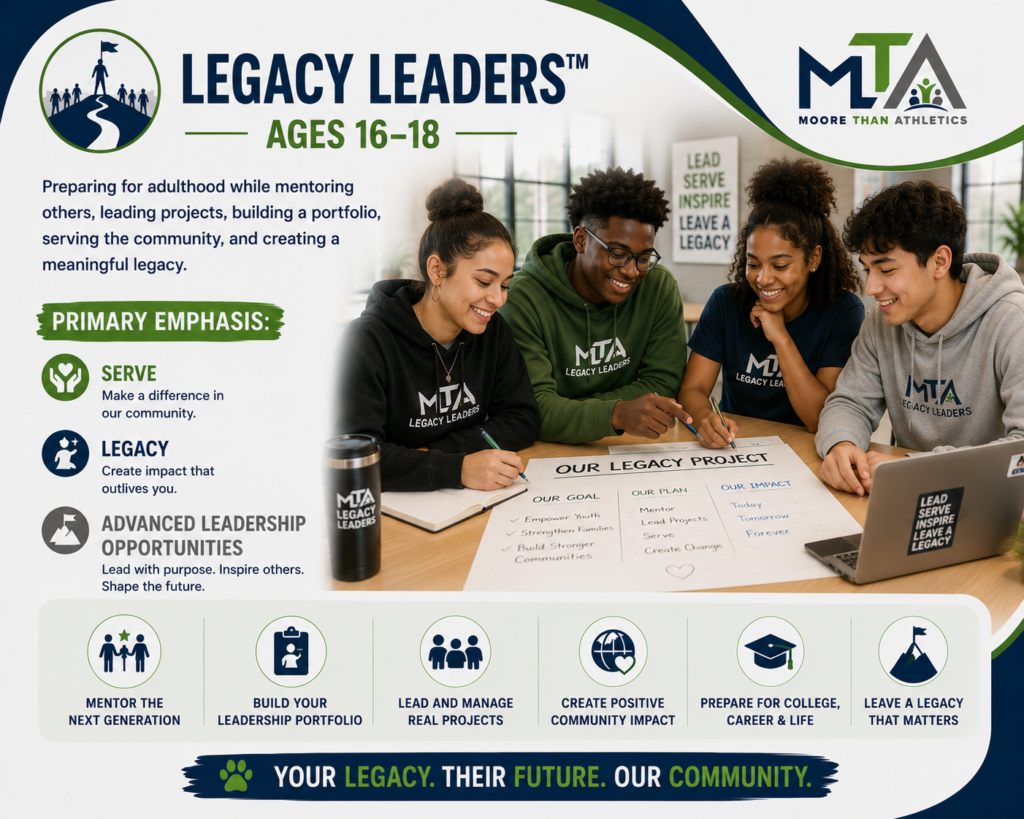
Legacy Leaders™ | Ages 16–18
Preparing for adulthood while mentoring others, leading projects, building a portfolio, serving the community, and creating a meaningful legacy.
Primary emphasis:
- Serve
- Legacy
- Advanced leadership opportunities
Age ranges provide structure, but placement and opportunities are also guided by readiness, maturity, support needs, and previous experience.
How Growth is Documented
Growth Youth Can See—and Families Can Celebrate
We recognize more than outcomes. We celebrate effort, consistency, character, courage, contribution, and growth.
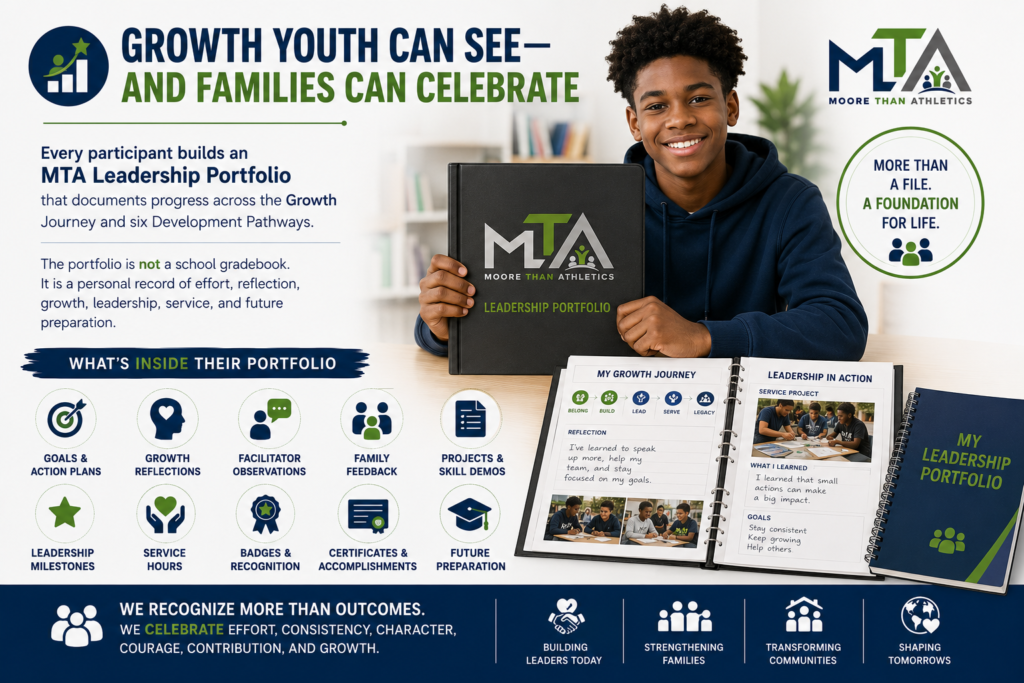
Every participant builds an MTA Leadership Portfolio that documents progress across the Growth Journey and six Development Pathways.
The portfolio is not a school gradebook. It is a personal record of effort, reflection, growth, leadership, service, and future preparation.
Depending on age, the portfolio may include:
- Personal goals and action plans
- Growth Journal reflections
- Facilitator observations
- Family feedback
- Projects and skill demonstrations
- Leadership milestones
- Service hours
- Badges and recognition
- Certificates and accomplishments
- Youth voice and self-assessment
- College, career, and future-readiness materials
The Roles of Families
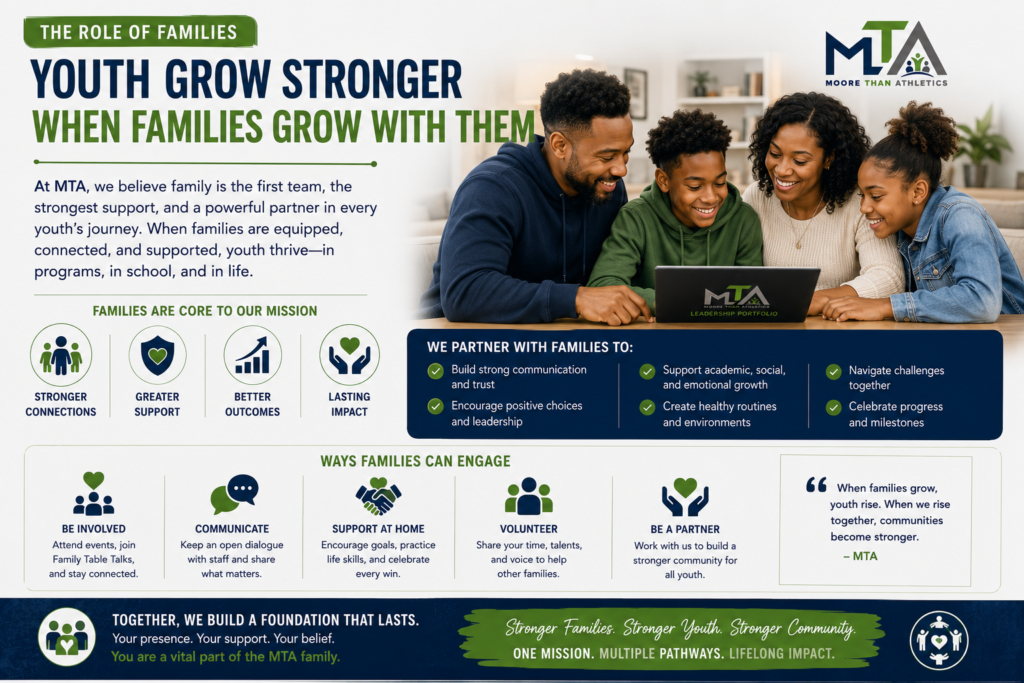
Youth Grow Stronger When Families Grow With Them
When we invest in one child, we strengthen a family. When families are stronger, communities become stronger.
MTA does not view families as spectators.
Parents, caregivers, and trusted adults are part of the development journey. Family engagement helps us better understand each young person, reinforce growth beyond program sessions, strengthen communication, and create opportunities for families to connect with one another.
Family experiences may include:
- MTA Family Table Talk events
- Family orientation and goal-setting
- Parent and caregiver workshops
- Family service opportunities
- Home connection activities
- Resource navigation and referrals
- Progress celebrations
- Family feedback and listening sessions
- Community-building experiences
Ways Youth Can Enter the Journey
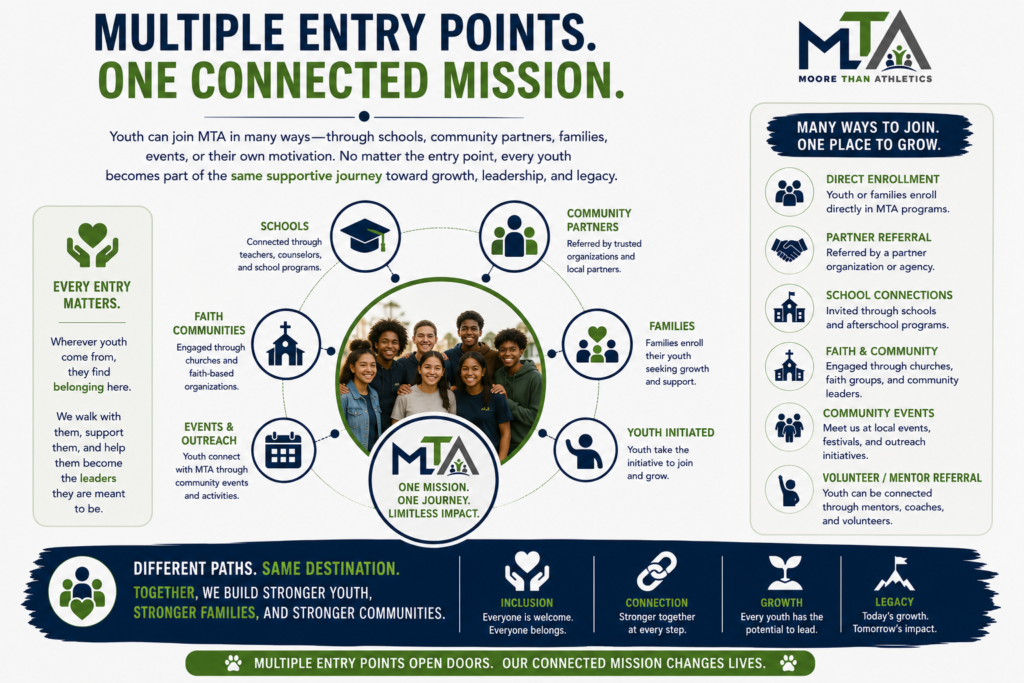
There is no single doorway into MTA—and no single definition of youth potential.
Multiple Entry Points. One Connected Mission.
Young people and families may connect with MTA in many different ways:
- Direct family interest or enrollment
- MTA programs and leadership cohorts
- Family Table Talk and community events
- School, church, or community referrals
- Sports-organization partnerships
- Agency or service-provider referrals
- Mentorship and volunteer connections
- Community-service opportunities
No matter where a young person enters, MTA helps connect the experience to the same whole-child framework and Growth Journey.
Frequently asked questions
Does every young person begin at Belong?
Yes. Every participant begins with belonging and orientation because relationships, trust, safety, and shared expectations are the foundation of growth. Older or more experienced youth may transition into Build or Lead opportunities more quickly after that foundation is established.
Do youth have to complete one stage before learning skills from another?
No. The stages are progressive, but development overlaps. A young person in Build may practice leadership, and a youth in Lead may continue strengthening confidence, wellness, and life skills.
How long does each stage take?
There is no single timeline. Progress depends on age, readiness, participation, consistency, demonstrated growth, opportunities, and individual support needs.
Is advancement guaranteed?
Youth are supported toward advancement, but new responsibilities are earned through readiness, character, participation, reflection, and demonstrated growth.
What happens when youth reach Legacy?
They may continue through advanced roles such as Peer Leader, Junior Mentor, Mentor-in-Training, Youth Facilitator, Youth Leadership Council member, alumni, or community ambassador.
Can a child participate without playing sports?
Absolutely. Athletics and movement may be used as engagement tools, but MTA is not limited to athletes. Youth can enter through leadership, mentorship, family engagement, life-skills, wellness, community service, events, or partner referrals.
How are families involved?
Families may participate through orientation, Family Table Talk, progress conversations, workshops, service activities, celebrations, feedback opportunities, and other connection experiences.
Every Journey Begins With Belonging.
Whether your child is discovering their voice, building confidence, preparing to lead, or ready to serve others, Moore Than Athletics provides a place to grow—with caring adults, meaningful experiences, family connection, and a community that believes in their potential.
Official enrollment is planned for fall 2026.
Join the interest list to receive Family Table Talk announcements, enrollment updates, program information, and opportunities to connect with the new MTA.